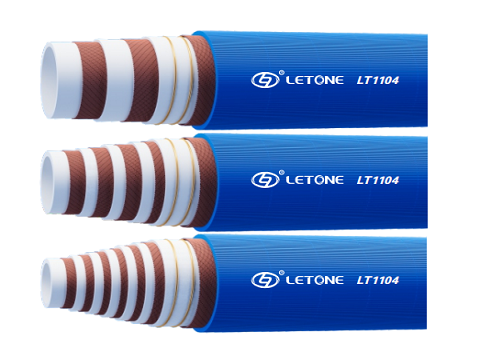
EPDM circulating coolant hoses
release date:2026-10-30 10:39:54
reading volume:
share:
EPDM circulating coolant hoses are flexible piping products made primarily of ethylene propylene diene monomer (EPDM) rubber, used for coolant delivery in closed or open circulating cooling systems. Typical applications include water-cooled heat dissipation in industrial equipment (welding equipment, induction heating devices, lasers, injection molding machines, power electronic equipment), data center liquid cooling systems, thermal management circuits for new energy batteries, and central air conditioning cooling water systems.
The technical focus of this product is to maintain the integrity of the hose's seal, chemical compatibility, and mechanical durability during long-term circulating delivery of coolants (water, water-ethylene glycol mixtures, water-propylene glycol mixtures). Unlike hydraulic hoses used for transporting oily media, the inner layer material of coolant delivery hoses must prioritize water resistance and hydrolysis resistance; the molecular structure of EPDM makes it specifically suitable for this application scenario.
II. EPDM Material Properties and Coolant Compatibility
Hydrolysis Resistance: EPDM's main molecular chain is a saturated carbon chain, free of easily hydrolyzed polar groups such as ester and amide groups. Therefore, it is not prone to hydrolytic degradation during long-term contact with water and water-based coolants. This characteristic allows the inner layer of EPDM to maintain stable physical properties for a longer period in circulating cooling water systems, avoiding stickiness, cracking, or strength reduction caused by material hydrolysis.
 Ethylene Glycol Compatibility: Water-ethylene glycol mixtures are commonly used cooling media in closed-loop cooling systems, providing antifreeze and increasing boiling point. EPDM exhibits good tolerance to ethylene glycol and propylene glycol, with a small volume change rate at normal operating temperatures, maintaining sealing performance and mechanical strength. Industry standards typically require that the volume change rate of EPDM after immersion in a 25% ethylene glycol solution at 100℃ for 168 hours should not exceed 10%.
Heat Aging Resistance: The saturated carbon chain structure of EPDM gives it superior resistance to thermo-oxidative aging compared to general-purpose rubbers containing unsaturated double bonds. Within the operating temperature range of circulating cooling systems (typically -40℃ to +100℃), the inner and outer layers of EPDM maintain elasticity and strength, delaying aging phenomena such as hardening and cracking.
Electrical Insulation Performance: EPDM has a high volume resistivity, making it suitable for cooling pipelines requiring electrical insulation, such as liquid cooling circuits in high-voltage power electronic equipment. The peroxide curing system further reduces the extractable content, helping to maintain the insulation performance of deionized water cooling systems.
Application Boundaries: EPDM has limited tolerance to mineral oils and aromatic hydrocarbon solvents. If oil contaminants are introduced into the cooling system, or if coolants containing oily additives are used, their impact on EPDM pipelines must be assessed. Furthermore, the long-term suitability of EPDM in high-temperature (above 120℃) or high-concentration strong oxidizing media needs to be verified through specialized testing.
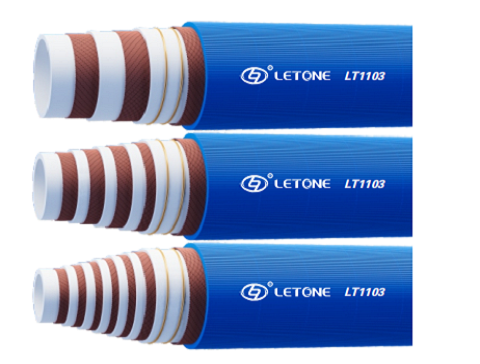
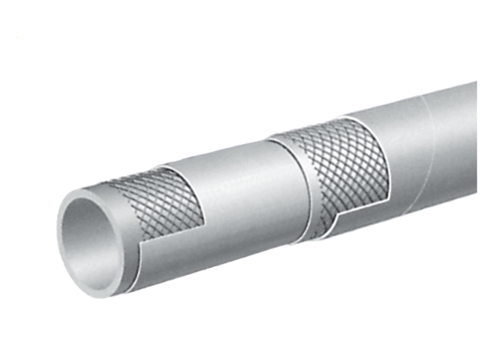
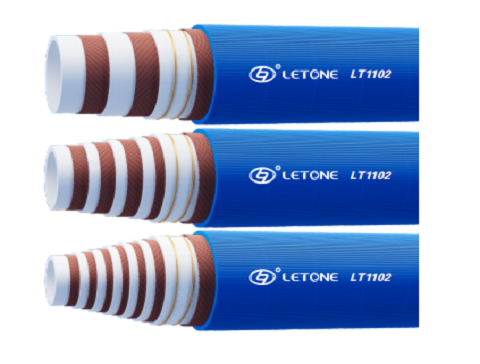
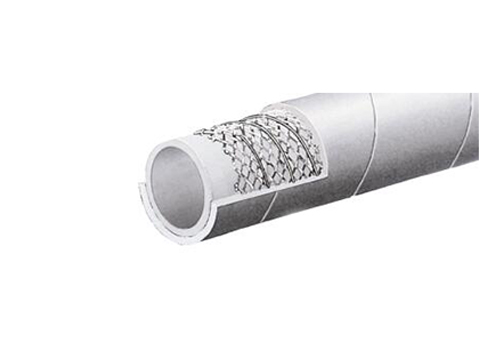
III. Structural Design and Material Composition Inner Layer (Inner Adhesive Layer): Primarily composed of peroxide-cured EPDM, with a thickness typically between 1.5mm and 3.0mm. Compared to sulfur vulcanization, peroxide vulcanization systems form a more uniform cross-linked network and have a lower extractable content, helping to maintain the cleanliness and electrical insulation properties of the coolant. For deionized water cooling systems, the ion release level of the inner layer compound is an important consideration.
Reinforcing Layer: The reinforcement structure is selected according to the operating pressure level. Fiber braided reinforcement is suitable for medium- and low-pressure cooling circuits (operating pressure 1.0 MPa to 2.5 MPa), using high-strength polyester or aramid fibers to balance flexibility and pressure resistance; steel wire braided or wound reinforcement is suitable for higher-pressure cooling circuits, offering stronger pressure resistance. The braiding angle is controlled around 54°44' to balance radial pressure resistance and axial flexibility.
Outer Layer (Outer Rubber Layer): The main material is weather-resistant EPDM or neoprene rubber, with a thickness typically between 1.0 mm and 2.5 mm. The outer layer must possess wear resistance, ozone resistance, UV resistance, and weather aging resistance. For hoses used in data centers and electrical cabinets, the outer layer must meet flame retardant requirements; some products can achieve UL94 V-0 rating.
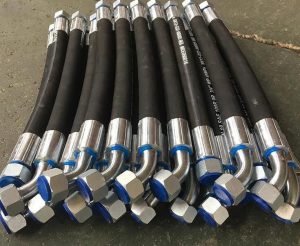
End Connections: Select crimp-type metal fittings, quick-connect fittings, or flange connections based on the system interface. Crimped fittings permanently connect the hose to the fitting through the plastic deformation of the metal outer tube, ensuring connection strength and sealing reliability.
IV. Core Performance Parameters
Operating Pressure: The operating pressure of circulating cooling systems is typically between 0.3MPa and 1.0MPa, with some centralized cooling systems reaching 1.6MPa. The rated operating pressure of the hose is generally designed to be 2 to 3 times the maximum operating pressure of the system, and the burst pressure is no less than 4 times the operating pressure.
Temperature Range: Standard products cover an operating temperature range of -40℃ to +100℃, with some products extendable to +120℃.
Inner Diameter Specifications: Common inner diameters range from 6mm to 50mm, including 1/4 inch, 3/8 inch, 1/2 inch, 5/8 inch, 3/4 inch, 1 inch, 1-1/4 inch, 1-1/2 inch, and 2 inch sizes.
Minimum Bending Radius: Related to the inner diameter and reinforcement structure. The minimum bending radius of fiber braided hoses is typically between 3 and 5 times the hose diameter, while steel wire reinforced structures have a slightly larger radius.
Cooling Media Compatibility: Suitable for common cooling media such as water, water-glycol mixtures, and water-propylene glycol mixtures. For deionized water systems, it must be confirmed that the ion release level of the inner layer material meets water quality requirements.
Cleanliness: The zinc, aluminum, and halogen content of the inner layer material must be controlled within limits to prevent precipitates from contaminating the coolant and clogging precision cooling channels.
V. Application Scenarios
Industrial Equipment Water Cooling: Cooling water circuits for welding equipment, induction heating devices, lasers, injection molding machines, and power electronic equipment.
Data Center Liquid Cooling System: Coolant delivery piping connecting the cooling distribution unit, water distributor, and cold plates in a plate-type liquid cooling system.
New Energy Battery Thermal Management: Flexible connection between the liquid cooling plates and cooling piping of power battery packs and energy storage battery cabinets.
Central Air Conditioning Cooling Water System: Cooling water circulation piping between cooling towers, chillers, and terminal equipment.
Power Equipment Cooling: Liquid cooling heat dissipation circuits for power electronic equipment such as frequency converters, inverters, and static var generators.