BOP Control Hoses - High-Pressure Fire-Resistant Flexible Hoses - API 16D Standard
release date:2026-08-18 09:50:58
reading volume:
share:
The BOP (Blowout Preventer) control hose is a critical hydraulic transmission component in a well control system, primarily used for remotely controlling the opening and closing of the blowout preventer (BOP) and delivering hydraulic oil under high-pressure conditions. As a flexible channel connecting the hydraulic control unit and the BOP body, this hose plays a crucial role in the final execution of wellhead pressure control during drilling operations—in the event of abnormal downhole pressure or signs of overflow, the control hose must transmit the hydraulic pressure to the BOP within a very short time, driving the gate or annular rubber core to seal the wellhead.
Therefore, this hose not only requires the pressure resistance and sealing performance of conventional hydraulic hoses but also must maintain functional integrity under extreme accident conditions such as fires, providing a reliable operating window for well control emergency response. The internationally accepted technical specification system uses API Spec. 16D (Specification for Control Systems of Drilling Rigs) as the core standard, with some products also referencing API 7K and Lloyd's Register fire testing specifications.
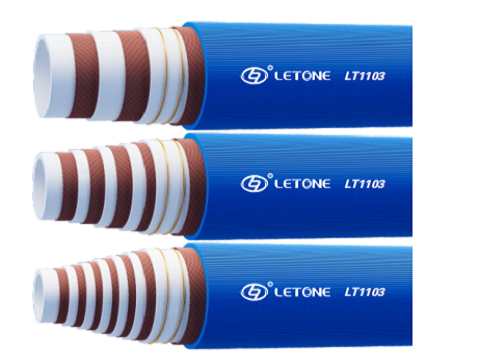
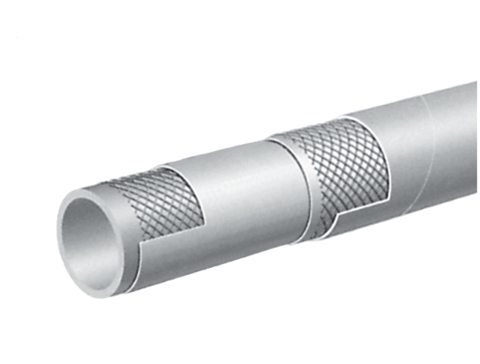
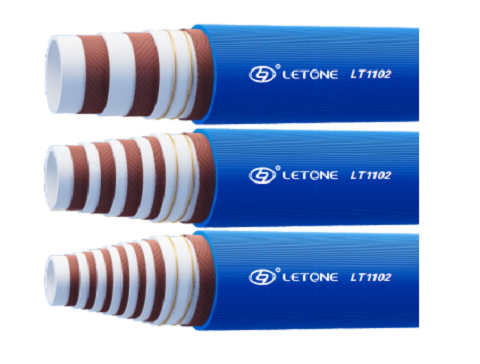
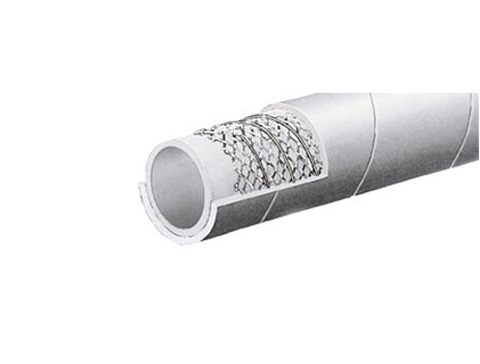
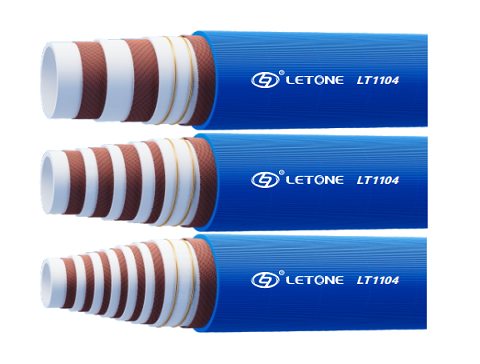
II. Product Structure and Material Design Typical BOP control hoses employ a multi-layer composite structure design, with each functional layer working synergistically to achieve high-pressure load-bearing capacity, fire resistance, and media compatibility. According to publicly available industry information, the mainstream structure includes the following layers:
Inner Layer (Inner Rubber Layer): Primarily made of nitrile butadiene rubber (NBR) or hydrogenated nitrile butadiene rubber (HNBR), possessing oil resistance, drilling fluid resistance, and flame retardant properties, preventing hydraulic media penetration and resisting chemical corrosion. HNBR performs better than ordinary NBR in terms of high-temperature aging and corrosion resistance.
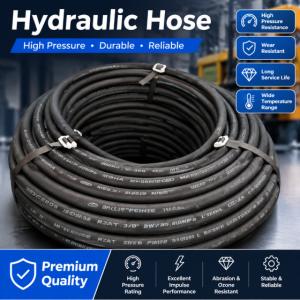 Reinforcing Layer: Employs a multi-layer high-strength steel wire spiral winding structure, commonly featuring 4 layers of high-strength, ultra-flexible steel wire. This structural design balances high-pressure bearing capacity (working pressures can reach over 5000 psi) with flexible bending performance, meeting the space constraints of complex piping layouts on drilling platforms. The number of reinforcing layers in some products can be adjusted between 2 and 8 to accommodate different pressure ratings.
Outer Layer (Outer Rubber Layer): Selected from high-temperature resistant, fire-resistant synthetic rubber, directly withstanding external environmental heat radiation and flame impact. An outer stainless steel armor layer (316 stainless steel) can be added to enhance resistance to mechanical damage and, in a fire, reflect heat radiation and delay heat transfer to the inner layers.
Fire-resistant insulation layer: A fire-resistant insulation material is added between the reinforcing layer and the outer layer, forming a composite fire-resistant barrier. This layer, together with the stainless steel armor, enables the product to withstand open flame combustion for a specified time without leakage or failure.
III. Key Performance Parameters
Working Pressure and Safety Factor: Taking a typical API 16D hose as an example, the nominal working pressure (W.P.) is 5000 psi (approximately 34.5 MPa), the verified pressure (T.P.) is 7500 psi (approximately 51.7 MPa), the minimum burst pressure (Min. B.P.) is not less than 15000 psi (approximately 103.4 MPa), and the safety factor is approximately three times the working pressure. Some products are available with higher pressure ratings (e.g., 21 MPa to 70 MPa range) to suit different well control system requirements.
Fire Resistance: The core performance indicator is no leakage for 5 minutes under open flame conditions at 704℃ ± 50℃. This indicator originates from the requirements of API 16D and Lloyd's Register fire protection test procedures, simulating the continuous working time required for emergency well shut-in operations under drilling platform fire conditions. Some products claim to withstand higher temperatures (e.g., 750℃ × 30 minutes or 1093℃ × 5 minutes), but the final compliance determination is still based on the test conditions specified in API 16D.
Operating Temperature Range: Under normal operating conditions, the applicable ambient temperature is approximately -40℃ to +100℃, and some products can be extended to +121℃ or +150℃. Low-temperature performance is of practical significance for drilling operations in polar or high-altitude regions.
Minimum Bending Radius: Depending on the hose inner diameter, the minimum bending radius (Min. B.R.) is generally between 300 mm and 800 mm, and the value is positively correlated with the nominal diameter. This parameter directly affects the bending flexibility and space adaptability of the pipeline installation.
Specifications: Commonly used inner diameter specifications include 1/2 in, 3/4 in, 1 in, 1-1/2 in, and 2 in, covering various control loop requirements from annular blowout preventers (BOPs) to gate BOPs.
IV. Design and Manufacturing Compliance Requirements
API Spec. 16D sets forth system performance qualification and quality control requirements for BOP control hoses. Based on industry practice, compliance points include, but are not limited to:
Fire Resistance Testing Procedure: The hose assembly must undergo an open flame exposure test at a specified temperature (approximately 704°C) and rated operating pressure for 5 minutes. No leakage is permitted during or after the test.
End Connections: Connections must be crimped, and the crimped area must be covered with fire-resistant tape or a metal sheath to ensure the connection area also meets fire resistance requirements. Connection threads should be compatible with common interface types such as NPT and R.
Quality Management System: Manufacturers typically need to obtain API Q1 quality management system certification and product type approval from a third-party classification society (such as Lloyd's Register or ABS).
Material Compatibility: Products used in hydrogen sulfide (H₂S) environments must adhere to NACE MR0175 standards to control the material's resistance to sulfide stress cracking.
V. Application Scenarios and Selection Recommendations BOP control hoses are widely used in onshore drilling, offshore platforms, shale gas, and deep-sea drilling operations, covering control loops for annular blowout preventers (BOPs), gate blowout preventers (BOPs), and rotary BOPs (BOPs). In marine engineering, additional consideration must be given to the hose's fatigue life and flexibility rating under dynamic conditions (platform drift, heave), referring to the API 16C FSL classification system.
When selecting a hose, the following factors should be comprehensively evaluated: the matching of the system's rated operating pressure with the hose's pressure rating; the compatibility of the ambient temperature range with the hose material's temperature resistance; the bending radius limitations of the installation space; and whether stainless steel armor is required to meet additional protection requirements. The end connection type (union, flange, etc.) should be consistent with the interface of the BOP and control manifold.
Reinforcing Layer: Employs a multi-layer high-strength steel wire spiral winding structure, commonly featuring 4 layers of high-strength, ultra-flexible steel wire. This structural design balances high-pressure bearing capacity (working pressures can reach over 5000 psi) with flexible bending performance, meeting the space constraints of complex piping layouts on drilling platforms. The number of reinforcing layers in some products can be adjusted between 2 and 8 to accommodate different pressure ratings.
Outer Layer (Outer Rubber Layer): Selected from high-temperature resistant, fire-resistant synthetic rubber, directly withstanding external environmental heat radiation and flame impact. An outer stainless steel armor layer (316 stainless steel) can be added to enhance resistance to mechanical damage and, in a fire, reflect heat radiation and delay heat transfer to the inner layers.
Fire-resistant insulation layer: A fire-resistant insulation material is added between the reinforcing layer and the outer layer, forming a composite fire-resistant barrier. This layer, together with the stainless steel armor, enables the product to withstand open flame combustion for a specified time without leakage or failure.
III. Key Performance Parameters
Working Pressure and Safety Factor: Taking a typical API 16D hose as an example, the nominal working pressure (W.P.) is 5000 psi (approximately 34.5 MPa), the verified pressure (T.P.) is 7500 psi (approximately 51.7 MPa), the minimum burst pressure (Min. B.P.) is not less than 15000 psi (approximately 103.4 MPa), and the safety factor is approximately three times the working pressure. Some products are available with higher pressure ratings (e.g., 21 MPa to 70 MPa range) to suit different well control system requirements.
Fire Resistance: The core performance indicator is no leakage for 5 minutes under open flame conditions at 704℃ ± 50℃. This indicator originates from the requirements of API 16D and Lloyd's Register fire protection test procedures, simulating the continuous working time required for emergency well shut-in operations under drilling platform fire conditions. Some products claim to withstand higher temperatures (e.g., 750℃ × 30 minutes or 1093℃ × 5 minutes), but the final compliance determination is still based on the test conditions specified in API 16D.
Operating Temperature Range: Under normal operating conditions, the applicable ambient temperature is approximately -40℃ to +100℃, and some products can be extended to +121℃ or +150℃. Low-temperature performance is of practical significance for drilling operations in polar or high-altitude regions.
Minimum Bending Radius: Depending on the hose inner diameter, the minimum bending radius (Min. B.R.) is generally between 300 mm and 800 mm, and the value is positively correlated with the nominal diameter. This parameter directly affects the bending flexibility and space adaptability of the pipeline installation.
Specifications: Commonly used inner diameter specifications include 1/2 in, 3/4 in, 1 in, 1-1/2 in, and 2 in, covering various control loop requirements from annular blowout preventers (BOPs) to gate BOPs.
IV. Design and Manufacturing Compliance Requirements
API Spec. 16D sets forth system performance qualification and quality control requirements for BOP control hoses. Based on industry practice, compliance points include, but are not limited to:
Fire Resistance Testing Procedure: The hose assembly must undergo an open flame exposure test at a specified temperature (approximately 704°C) and rated operating pressure for 5 minutes. No leakage is permitted during or after the test.
End Connections: Connections must be crimped, and the crimped area must be covered with fire-resistant tape or a metal sheath to ensure the connection area also meets fire resistance requirements. Connection threads should be compatible with common interface types such as NPT and R.
Quality Management System: Manufacturers typically need to obtain API Q1 quality management system certification and product type approval from a third-party classification society (such as Lloyd's Register or ABS).
Material Compatibility: Products used in hydrogen sulfide (H₂S) environments must adhere to NACE MR0175 standards to control the material's resistance to sulfide stress cracking.
V. Application Scenarios and Selection Recommendations BOP control hoses are widely used in onshore drilling, offshore platforms, shale gas, and deep-sea drilling operations, covering control loops for annular blowout preventers (BOPs), gate blowout preventers (BOPs), and rotary BOPs (BOPs). In marine engineering, additional consideration must be given to the hose's fatigue life and flexibility rating under dynamic conditions (platform drift, heave), referring to the API 16C FSL classification system.
When selecting a hose, the following factors should be comprehensively evaluated: the matching of the system's rated operating pressure with the hose's pressure rating; the compatibility of the ambient temperature range with the hose material's temperature resistance; the bending radius limitations of the installation space; and whether stainless steel armor is required to meet additional protection requirements. The end connection type (union, flange, etc.) should be consistent with the interface of the BOP and control manifold.
Previous: