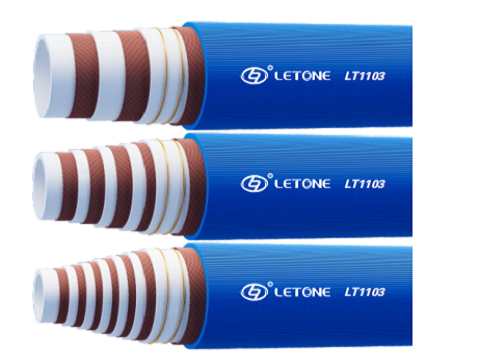
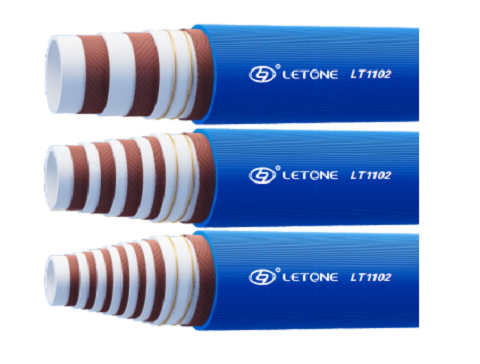
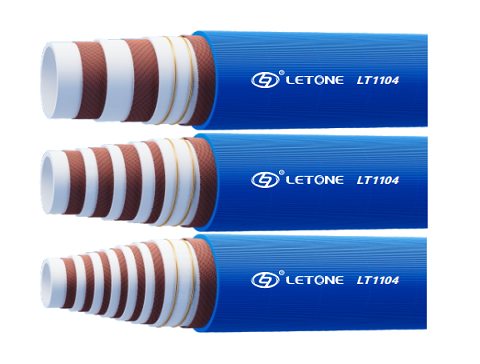
High Pressure Control Hose for BOP Stack, OEM Custom Length and End Fittings
release date:2026-08-18 10:24:57
reading volume:
share:
1. Introduction
The manufacturing of API 16D compliant BOP control hoses represents a specialized segment of the oilfield equipment industry, requiring precision engineering, rigorous quality control, and comprehensive testing capabilities. Factories producing these high-pressure hydraulic hoses for blowout preventer stacks operate within a framework of international standards, customer-specific requirements, and logistical considerations that extend from raw material procurement to final delivery. The ability to provide OEM custom lengths and end fittings, coupled with efficient containerized shipping in standard 20-foot or 40-foot containers, is essential for serving global drilling contractors and well control equipment suppliers.
This article provides an overview of the factory capabilities, production processes, quality assurance systems, and logistics operations involved in manufacturing and supplying API 16D BOP hoses. The focus is on the technical and operational aspects that enable consistent product quality and reliable delivery to drilling operations worldwide.
2. Factory Capabilities and Production Infrastructure
Manufacturing Facility Requirements: A factory producing API 16D BOP hoses must maintain a controlled manufacturing environment suitable for handling rubber compounds, high-tensile steel wire, and precision fitting attachment equipment. The facility typically includes dedicated production lines for hose extrusion, reinforcement winding, vulcanization, armor application, and fitting attachment. Cleanroom or controlled-area conditions may be required for certain production steps to prevent contamination of the inner tube and compound materials.
Equipment and Machinery: The production process requires specialized equipment including extrusion lines for rubber compound application, wire winding machines capable of applying multiple layers at controlled tensions and lay angles, vulcanization presses or autoclaves for curing the rubber layers, stainless steel armor winding or interlocking machines, and swaging or crimping presses for fitting attachment. The precision and calibration of this equipment directly affect the final hose dimensional accuracy, pressure rating, and service life. Regular maintenance and calibration schedules are essential to maintain product consistency.
Workforce Expertise: Skilled operators and technicians are required for each production stage. Operators must understand the material properties of rubber compounds and steel wire, the critical parameters of each production process, and the inspection criteria for quality verification. Training programs and documented work instructions ensure that production personnel maintain the required level of competence.
 Testing Laboratory: An accredited in-house testing laboratory is a standard feature of API 16D hose factories. The laboratory is equipped with hydrostatic pressure test equipment, fire test furnaces capable of reaching 704°C with controlled temperature profiles, tensile and adhesion test machines, and environmental chambers for temperature and aging tests. The laboratory must be operated by qualified technicians following documented test procedures that align with API and other recognized standards.
3. Manufacturing Process Overview
Compound Preparation: The rubber compounds used for the inner tube, intermediate layers, and outer cover are mixed according to proprietary formulations. The compound ingredients – including polymers, fillers, plasticizers, curing agents, antioxidants, and flame-retardant additives – are weighed and mixed in internal mixers to achieve a homogeneous dispersion. The mixed compound is then processed into strip or pellet form for feeding into the extrusion equipment.
Inner Tube Extrusion: The first production step forms the inner tube by extruding the compound through a die onto a rotating mandrel. The extrusion process must achieve consistent wall thickness, smooth internal surface finish, and the correct inside diameter. The inner tube is then cooled and passed to the next production stage, where the first reinforcement layer is applied.
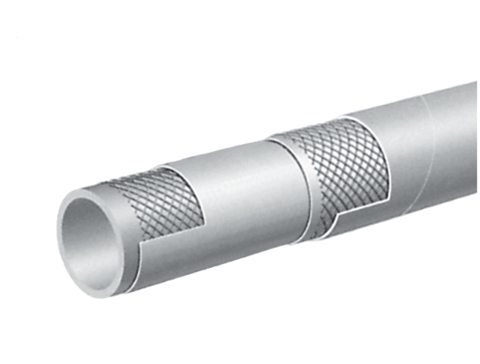
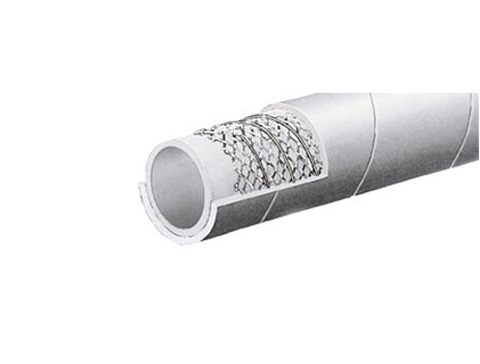
Wire Reinforcement Application: The high-tensile steel wire is wound onto the inner tube using specialized spiral winding machines. Each reinforcement layer is applied at a precise lay angle, with tension carefully controlled to achieve the required compaction and strength. Multiple reinforcement layers are applied sequentially, with rubber skim layers between them to bond the structure together. The number of reinforcement layers and the wire specifications determine the pressure rating and flexibility of the finished hose.
Vulcanization: After the reinforcement structure is complete, the hose is cured in a vulcanization process that cross-links the rubber polymers. Vulcanization can be performed in an autoclave under controlled temperature and pressure, or through continuous vulcanization processes for longer hose lengths. The curing parameters – time, temperature, and pressure – are monitored and controlled to achieve the specified physical properties of the rubber compounds.
Thermal Barrier and Outer Cover Application: For fire-resistant constructions, a thermal barrier layer of ceramic fiber or intumescent material is applied over the cured reinforcement structure. This is followed by extrusion of the outer flame-retardant rubber cover. For stainless steel armored constructions, the cover is followed by application of the interlocked or spiral-wrapped stainless steel armor, applied using specialized winding or forming equipment.
Fitting Attachment: Once the hose body is complete and verified for dimensional accuracy, the end fittings are attached using swaging or crimping presses. The fittings are positioned on the hose ends, and the press applies controlled radial compression to permanently attach the fitting to the hose. The compression parameters are specified for each hose size and fitting type to achieve the required pull-out resistance and sealing performance. After fitting attachment, the hose assembly is inspected for alignment and dimensional correctness.
4. OEM Customization Capabilities
Custom Lengths: API 16D BOP hoses can be manufactured to virtually any length specified by the customer. Typical lengths for BOP stack connections range from short jumpers of a few meters to longer run lengths of 30, 50, or even 100 meters, depending on the rig layout and the distance from the hydraulic control unit to the BOP stack. Custom length manufacturing requires accurate length measurement during production and careful handling to maintain dimensional stability. The factory is capable of producing exact lengths with small tolerances to meet the specific needs of each installation.
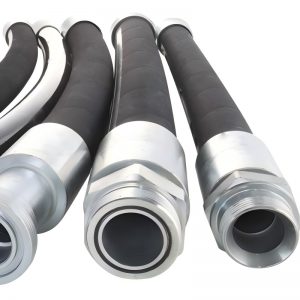
End Fittings: One of the key OEM customization capabilities is the provision of end fittings that match the customer‘s specific hydraulic connection requirements. Available fitting types include high-pressure hammer unions in various configurations such as Fig 1002, 1502, and 2002; API flanged connections in a range of pressure ratings and bolt patterns; threaded connections in NPT, BSP, or proprietary thread forms; and custom-engineered connections for specialized applications. The fitting material is typically high-strength alloy steel with appropriate surface treatments or coatings to match the service environment. The factory maintains inventory of fitting components for standard connections and can source or manufacture custom fittings to meet unique requirements.
Armor Options: Stainless steel armor can be supplied in various configurations to suit the application. Interlocked armor provides good flexibility and bend radius performance, while spiral-wrapped armor offers higher resistance to crush and impact loads. The armor grade is selected based on the service environment, with 304 stainless steel suitable for general offshore and onshore applications and 316 stainless steel recommended for corrosive or H₂S environments. The factory can provide armor with different strip thicknesses and gap configurations to balance protection against weight and flexibility.
Additional Customization: OEM customers may specify additional features including fire-resistant sleeves or wraps over the end fittings for enhanced fire protection, color coding for identification of hydraulic circuits, protective caps or plugs for end fittings during transport and storage, and custom labeling or marking with customer specifications.
5. Quality Control and Testing Program
Raw Material Inspection: All incoming raw materials are inspected before acceptance. Rubber compound batches are tested for viscosity, cure characteristics, and physical properties against specified standards. Steel wire is inspected for tensile strength, diameter, and surface quality. Fittings and armor materials are verified for dimensional accuracy and material grade. The factory maintains material certificates for traceability to the original manufacturers.
In-Process Inspections: During production, multiple inspections are performed to verify compliance with specifications. Inner tube dimensions and surface quality are checked during extrusion. Reinforcement wire layers are inspected for lay angle, tension, and coverage. The hose outside diameter and concentricity are measured after each major production step. Vulcanization parameters are recorded and verified against the process specification. Armor application is inspected for continuity, gap consistency, and overall coverage.
Hydrostatic Testing: Each hose assembly is subjected to a hydrostatic proof test at 1.5 times the rated working pressure before shipment. The test involves filling the hose with water or a suitable test fluid, pressurizing to the test pressure, and holding for a specified period to verify pressure retention. The test also evaluates the integrity of the end fittings and the connection zones. Test records are generated and maintained for each assembly.
Fire Resistance Testing: For hoses requiring fire resistance certification, the factory must demonstrate compliance with the API 16D fire test requirement and any additional UL/CSA test specifications. Fire testing may be performed on production samples rather than on every assembly, with representative samples selected from production runs for testing at accredited laboratories. The factory maintains records of fire test results for each product configuration.
Burst Testing: Burst testing is performed on production samples to verify the safety margin and provide data for product qualification. The test involves pressurizing the sample to the burst pressure or until failure occurs. Test pressure and failure mode are recorded for engineering analysis. Burst test results are used to validate the design and to support the pressure rating claims.
Third-Party Inspections: The factory’s quality system is subject to periodic audits by third-party certifying bodies. These audits verify compliance with API Q1 and the specific product certification requirements. The auditors review the quality manual, production records, test results, and corrective action documentation. Successful audits result in the continued authorization to use the API monogram and other required certifications.
6. Packaging and Container Loading
Coiling and Spooling: For efficient transport and handling, BOP hoses are typically supplied in coils or on reels. The coil diameter must be sufficient to avoid bending the hose below its minimum bend radius during storage and transport. The factory uses coiling equipment that maintains the hose in a controlled curve to prevent kinking or stress concentration. For longer hoses, reels are used to provide more compact shipping dimensions and easier handling at the destination.
Protective Packaging: The hose ends are fitted with protective caps or plugs to prevent ingress of contamination during transport. The end fittings may be wrapped with protective material to prevent mechanical damage. The hose body may be covered with protective sheeting to prevent dirt accumulation and UV exposure during extended storage. The packaging materials are selected to provide adequate protection while being economical and compatible with the shipping method.
Container Loading – 20ft Containers: A standard 20-foot container provides approximately 33 cubic meters of volume and a maximum payload of about 28 metric tons for most shipping lines. For BOP hoses, the loading arrangement is designed to maximize space utilization while preventing shifting during transport. The hose coils are loaded into the container and secured with dunnage and lashing straps to prevent movement. Care is taken to ensure that the hose coil shape is maintained and that no sharp edges or heavy loads press against the hose body. A typical 20-foot container can accommodate a quantity of hoses determined by hose diameter, armor type, and coil dimensions.
Container Loading – 40ft Containers: A 40-foot container offers approximately 67 cubic meters of volume and a maximum payload typically around 28 metric tons as well for standard containers, with high-cube versions providing additional vertical space. The larger space allows for more flexible loading arrangements and larger coil sizes. For high-volume orders, 40-foot containers provide shipping efficiency by consolidating more product in a single shipment. The loading process includes similar securing methods to the 20-foot container, with additional attention to the longer container and increased cargo weight.
Export Documentation: The factory assists with export documentation including the commercial invoice, packing list, bill of lading, certificate of origin, and any other documents required by the destination country. The documentation must accurately reflect the contents of each container to facilitate customs clearance and delivery.
7. Supply Chain and Logistics
Raw Material Sourcing: The factory maintains relationships with qualified suppliers of rubber compounds, steel wire, armor materials, and fittings. Supplier qualification includes assessment of quality systems, production capacity, and delivery performance. Multiple suppliers may be qualified for critical materials to ensure supply continuity.
Order Fulfillment Process: Customer orders are processed through a structured workflow that includes order review, production scheduling, material allocation, manufacturing, quality control testing, packaging, and shipping. The factory uses inventory management and production planning tools to schedule orders efficiently while allowing for the customizations that are typical for API 16D BOP hose orders. Lead times are established based on order quantity, customization requirements, and current production load.
Shipping Terms and Options: The factory can arrange shipping under various terms including FOB shipping point, CIF or CFR to the destination port, and door-to-door delivery services. Shipping options are selected based on the customer’s requirements, the shipping costs, and the urgency of the delivery. Air freight may be used for urgent smaller orders, while sea freight in containers is the standard method for volume shipments.
Inventory Management: For customers requiring just-in-time delivery or those with regular demand, the factory may maintain inventory of standard configurations or components to enable faster delivery. Buffer stock of commonly specified materials is maintained to support short-notice orders for emergency requirements.
Testing Laboratory: An accredited in-house testing laboratory is a standard feature of API 16D hose factories. The laboratory is equipped with hydrostatic pressure test equipment, fire test furnaces capable of reaching 704°C with controlled temperature profiles, tensile and adhesion test machines, and environmental chambers for temperature and aging tests. The laboratory must be operated by qualified technicians following documented test procedures that align with API and other recognized standards.
3. Manufacturing Process Overview
Compound Preparation: The rubber compounds used for the inner tube, intermediate layers, and outer cover are mixed according to proprietary formulations. The compound ingredients – including polymers, fillers, plasticizers, curing agents, antioxidants, and flame-retardant additives – are weighed and mixed in internal mixers to achieve a homogeneous dispersion. The mixed compound is then processed into strip or pellet form for feeding into the extrusion equipment.
Inner Tube Extrusion: The first production step forms the inner tube by extruding the compound through a die onto a rotating mandrel. The extrusion process must achieve consistent wall thickness, smooth internal surface finish, and the correct inside diameter. The inner tube is then cooled and passed to the next production stage, where the first reinforcement layer is applied.
Wire Reinforcement Application: The high-tensile steel wire is wound onto the inner tube using specialized spiral winding machines. Each reinforcement layer is applied at a precise lay angle, with tension carefully controlled to achieve the required compaction and strength. Multiple reinforcement layers are applied sequentially, with rubber skim layers between them to bond the structure together. The number of reinforcement layers and the wire specifications determine the pressure rating and flexibility of the finished hose.
Vulcanization: After the reinforcement structure is complete, the hose is cured in a vulcanization process that cross-links the rubber polymers. Vulcanization can be performed in an autoclave under controlled temperature and pressure, or through continuous vulcanization processes for longer hose lengths. The curing parameters – time, temperature, and pressure – are monitored and controlled to achieve the specified physical properties of the rubber compounds.
Thermal Barrier and Outer Cover Application: For fire-resistant constructions, a thermal barrier layer of ceramic fiber or intumescent material is applied over the cured reinforcement structure. This is followed by extrusion of the outer flame-retardant rubber cover. For stainless steel armored constructions, the cover is followed by application of the interlocked or spiral-wrapped stainless steel armor, applied using specialized winding or forming equipment.
Fitting Attachment: Once the hose body is complete and verified for dimensional accuracy, the end fittings are attached using swaging or crimping presses. The fittings are positioned on the hose ends, and the press applies controlled radial compression to permanently attach the fitting to the hose. The compression parameters are specified for each hose size and fitting type to achieve the required pull-out resistance and sealing performance. After fitting attachment, the hose assembly is inspected for alignment and dimensional correctness.
4. OEM Customization Capabilities
Custom Lengths: API 16D BOP hoses can be manufactured to virtually any length specified by the customer. Typical lengths for BOP stack connections range from short jumpers of a few meters to longer run lengths of 30, 50, or even 100 meters, depending on the rig layout and the distance from the hydraulic control unit to the BOP stack. Custom length manufacturing requires accurate length measurement during production and careful handling to maintain dimensional stability. The factory is capable of producing exact lengths with small tolerances to meet the specific needs of each installation.
End Fittings: One of the key OEM customization capabilities is the provision of end fittings that match the customer‘s specific hydraulic connection requirements. Available fitting types include high-pressure hammer unions in various configurations such as Fig 1002, 1502, and 2002; API flanged connections in a range of pressure ratings and bolt patterns; threaded connections in NPT, BSP, or proprietary thread forms; and custom-engineered connections for specialized applications. The fitting material is typically high-strength alloy steel with appropriate surface treatments or coatings to match the service environment. The factory maintains inventory of fitting components for standard connections and can source or manufacture custom fittings to meet unique requirements.
Armor Options: Stainless steel armor can be supplied in various configurations to suit the application. Interlocked armor provides good flexibility and bend radius performance, while spiral-wrapped armor offers higher resistance to crush and impact loads. The armor grade is selected based on the service environment, with 304 stainless steel suitable for general offshore and onshore applications and 316 stainless steel recommended for corrosive or H₂S environments. The factory can provide armor with different strip thicknesses and gap configurations to balance protection against weight and flexibility.
Additional Customization: OEM customers may specify additional features including fire-resistant sleeves or wraps over the end fittings for enhanced fire protection, color coding for identification of hydraulic circuits, protective caps or plugs for end fittings during transport and storage, and custom labeling or marking with customer specifications.
5. Quality Control and Testing Program
Raw Material Inspection: All incoming raw materials are inspected before acceptance. Rubber compound batches are tested for viscosity, cure characteristics, and physical properties against specified standards. Steel wire is inspected for tensile strength, diameter, and surface quality. Fittings and armor materials are verified for dimensional accuracy and material grade. The factory maintains material certificates for traceability to the original manufacturers.
In-Process Inspections: During production, multiple inspections are performed to verify compliance with specifications. Inner tube dimensions and surface quality are checked during extrusion. Reinforcement wire layers are inspected for lay angle, tension, and coverage. The hose outside diameter and concentricity are measured after each major production step. Vulcanization parameters are recorded and verified against the process specification. Armor application is inspected for continuity, gap consistency, and overall coverage.
Hydrostatic Testing: Each hose assembly is subjected to a hydrostatic proof test at 1.5 times the rated working pressure before shipment. The test involves filling the hose with water or a suitable test fluid, pressurizing to the test pressure, and holding for a specified period to verify pressure retention. The test also evaluates the integrity of the end fittings and the connection zones. Test records are generated and maintained for each assembly.
Fire Resistance Testing: For hoses requiring fire resistance certification, the factory must demonstrate compliance with the API 16D fire test requirement and any additional UL/CSA test specifications. Fire testing may be performed on production samples rather than on every assembly, with representative samples selected from production runs for testing at accredited laboratories. The factory maintains records of fire test results for each product configuration.
Burst Testing: Burst testing is performed on production samples to verify the safety margin and provide data for product qualification. The test involves pressurizing the sample to the burst pressure or until failure occurs. Test pressure and failure mode are recorded for engineering analysis. Burst test results are used to validate the design and to support the pressure rating claims.
Third-Party Inspections: The factory’s quality system is subject to periodic audits by third-party certifying bodies. These audits verify compliance with API Q1 and the specific product certification requirements. The auditors review the quality manual, production records, test results, and corrective action documentation. Successful audits result in the continued authorization to use the API monogram and other required certifications.
6. Packaging and Container Loading
Coiling and Spooling: For efficient transport and handling, BOP hoses are typically supplied in coils or on reels. The coil diameter must be sufficient to avoid bending the hose below its minimum bend radius during storage and transport. The factory uses coiling equipment that maintains the hose in a controlled curve to prevent kinking or stress concentration. For longer hoses, reels are used to provide more compact shipping dimensions and easier handling at the destination.
Protective Packaging: The hose ends are fitted with protective caps or plugs to prevent ingress of contamination during transport. The end fittings may be wrapped with protective material to prevent mechanical damage. The hose body may be covered with protective sheeting to prevent dirt accumulation and UV exposure during extended storage. The packaging materials are selected to provide adequate protection while being economical and compatible with the shipping method.
Container Loading – 20ft Containers: A standard 20-foot container provides approximately 33 cubic meters of volume and a maximum payload of about 28 metric tons for most shipping lines. For BOP hoses, the loading arrangement is designed to maximize space utilization while preventing shifting during transport. The hose coils are loaded into the container and secured with dunnage and lashing straps to prevent movement. Care is taken to ensure that the hose coil shape is maintained and that no sharp edges or heavy loads press against the hose body. A typical 20-foot container can accommodate a quantity of hoses determined by hose diameter, armor type, and coil dimensions.
Container Loading – 40ft Containers: A 40-foot container offers approximately 67 cubic meters of volume and a maximum payload typically around 28 metric tons as well for standard containers, with high-cube versions providing additional vertical space. The larger space allows for more flexible loading arrangements and larger coil sizes. For high-volume orders, 40-foot containers provide shipping efficiency by consolidating more product in a single shipment. The loading process includes similar securing methods to the 20-foot container, with additional attention to the longer container and increased cargo weight.
Export Documentation: The factory assists with export documentation including the commercial invoice, packing list, bill of lading, certificate of origin, and any other documents required by the destination country. The documentation must accurately reflect the contents of each container to facilitate customs clearance and delivery.
7. Supply Chain and Logistics
Raw Material Sourcing: The factory maintains relationships with qualified suppliers of rubber compounds, steel wire, armor materials, and fittings. Supplier qualification includes assessment of quality systems, production capacity, and delivery performance. Multiple suppliers may be qualified for critical materials to ensure supply continuity.
Order Fulfillment Process: Customer orders are processed through a structured workflow that includes order review, production scheduling, material allocation, manufacturing, quality control testing, packaging, and shipping. The factory uses inventory management and production planning tools to schedule orders efficiently while allowing for the customizations that are typical for API 16D BOP hose orders. Lead times are established based on order quantity, customization requirements, and current production load.
Shipping Terms and Options: The factory can arrange shipping under various terms including FOB shipping point, CIF or CFR to the destination port, and door-to-door delivery services. Shipping options are selected based on the customer’s requirements, the shipping costs, and the urgency of the delivery. Air freight may be used for urgent smaller orders, while sea freight in containers is the standard method for volume shipments.
Inventory Management: For customers requiring just-in-time delivery or those with regular demand, the factory may maintain inventory of standard configurations or components to enable faster delivery. Buffer stock of commonly specified materials is maintained to support short-notice orders for emergency requirements.