Compressed air delivery pipe compression joint
release date:2026-09-22 10:32:25
reading volume:
share:
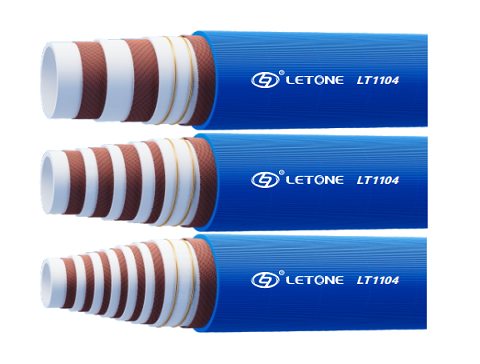
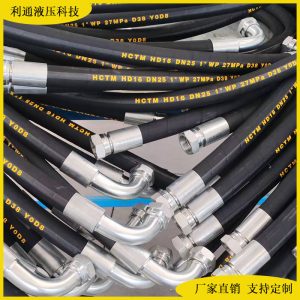
In pneumatic systems, hose assemblies are flexible channels that connect compressors, air storage tanks, dryers, filters, and various pneumatic actuators (cylinders, pneumatic motors, pneumatic valves, etc.). Compared with hard pipes, hose assemblies can adapt to the needs of equipment vibration, installation deviation, and movement operation, while the crimping joint ensures the sealing reliability and tensile strength of the connection part.
2、 Structural design and material composition
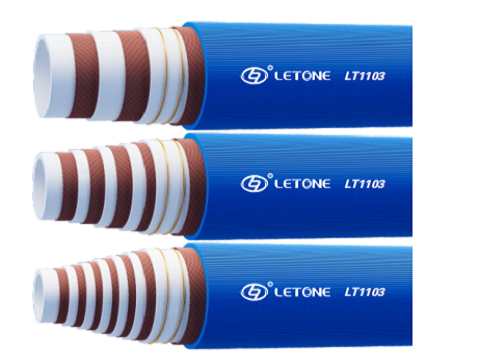
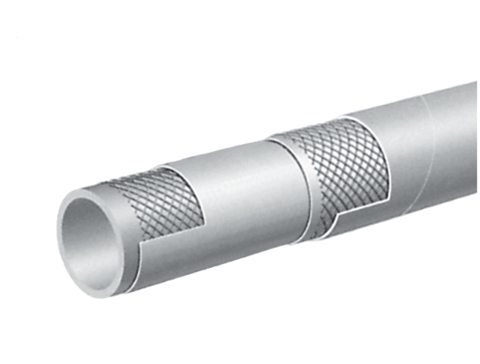
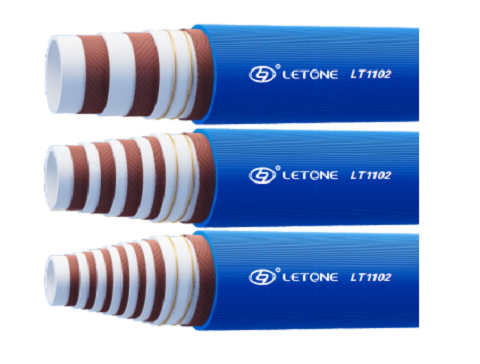
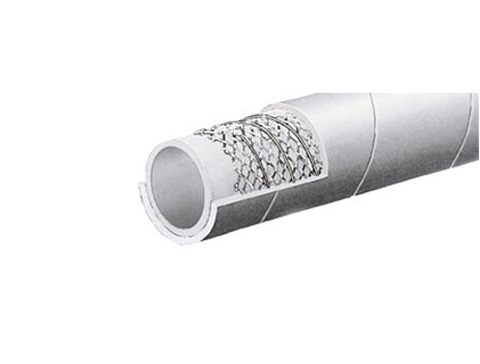
The pneumatic hose assembly adopts a multi-layer composite structure, and each layer cooperates to meet the comprehensive requirements of pressure resistance, wear resistance, and sealing.
Inner layer (inner adhesive layer): In direct contact with compressed air, the material selection should take into account both air tightness and oil resistance. Compressed air often contains trace amounts of lubricating oil (from compressor lubrication or oil mist), so nitrile rubber (NBR) is usually used as the inner rubber material, which has good resistance to mineral oil and synthetic oil. For oil-free lubrication air compression systems, EPDM or thermoplastic materials can also be used. The inner layer needs to maintain low permeability to prevent compressed air from leaking through the pipe wall and causing pressure loss.
 Enhancement layer: Provides compressive structural strength to ensure that the hose maintains dimensional stability under system operating pressure. There are two main forms of reinforcement: fiber weaving reinforcement using high-strength polyester fibers or aramid fibers, suitable for medium and low-pressure pneumatic systems, with good flexibility and small bending radius; The steel wire weaving reinforcement adopts copper plated high carbon steel wire weaving, which is suitable for high-pressure pneumatic systems and has stronger pressure bearing capacity.
Outer layer (outer adhesive layer): resistant to external environmental erosion and mechanical wear. The outer rubber layer is usually made of chloroprene rubber (CR) or styrene butadiene rubber (SBR), which have the characteristics of oil resistance, wear resistance, and weather aging resistance. In industrial field environments, the outer adhesive layer also needs to have certain tear and cutting resistance to cope with frictional contact with equipment structures, floors, and tools.
Buckle connector: The core connecting component of a hose assembly, which permanently connects the metal connector to the pipe body through a crimping process. The joint material is usually carbon steel or stainless steel, and the surface is galvanized or passivated to enhance corrosion resistance. The types of connectors include metric threads, imperial threads, NPT threads, and quick insert connectors, which are compatible with different interface specifications of pneumatic systems. The key parameters of the crimping process include crimping force, crimping amount, and crimping length, which determine the connection strength and sealing reliability between the joint and the pipe body.
3、 Core performance parameters
Working pressure: The working pressure of pneumatic systems is usually between 0.4MPa and 1.0MPa, and the working pressure of some industrial pneumatic tools can reach 1.6MPa. The rated working pressure of the hose assembly is generally designed to be 2 to 3 times the maximum working pressure of the system, and the burst pressure is not less than 4 times the working pressure.
Temperature range: The working temperature of standard pneumatic hoses covers -20 ℃ to+80 ℃, and some high-temperature resistant products can be extended to+100 ℃. Attention should be paid to the brittleness temperature of rubber materials in low-temperature environments, and to the aging rate of rubber materials in high-temperature environments.
Inner diameter specifications: Common inner diameter specifications range from 4mm to 25mm, including 5mm, 6.5mm, 8mm, 10mm, 13mm, 16mm, 19mm, 25mm, etc. Small caliber is suitable for precision pneumatic control and pneumatic instruments, while large caliber is suitable for pneumatic tools and high flow conveying.
Minimum bending radius: Depending on the inner diameter and reinforcement structure, the minimum bending radius of fiber woven pneumatic hoses is usually 3 to 5 times the diameter of the pipe.
Wear resistance: The wear resistance of the outer rubber layer is usually characterized by Akron wear or DIN wear. The wear of the outer rubber layer of high-quality pneumatic hoses is controlled at a low level to extend the service life under moving and dragging conditions.
4、 Key points of crimping joint process
The crimping joint is a key feature that distinguishes pneumatic hose assemblies from ordinary hoses. The crimping process uses external force to cause plastic deformation of the metal outer sleeve, tightly pressing the hose body onto the joint core, forming a dual effect of mechanical locking and sealing.
Control of crimping parameters: crimping force, crimping amount, and crimping length are the core parameters that determine the crimping quality. Insufficient clamping force can lead to insufficient connection strength between the joint and the pipe body, which may cause detachment under pressure; Excessive clamping force can lead to excessive compression of the pipe reinforcement layer, reducing the pressure bearing capacity of the area. The clamping amount needs to be accurately calculated based on the inner diameter of the hose, the structure of the reinforcement layer, and the specifications of the joint.
Joint core design: The surface of the joint core is usually equipped with circular grooves or serrated structures, which are embedded in the inner layer of the hose during the crimping process to increase the connection strength and sealing effect. The core material and surface treatment need to match the conveying medium and working environment.
Sealing performance: After the crimping is completed, the connection area between the joint and the pipe body needs to undergo a sealing test, usually held at 1.5 times the working pressure for a certain period of time, to observe for any leaks.
Tensile strength: The connection strength between the joint and the pipe body must meet the requirement of no axial slip or detachment under the design pressure. Some standards require that the tensile strength should not be lower than a certain proportion of the pipe body's burst strength.
Enhancement layer: Provides compressive structural strength to ensure that the hose maintains dimensional stability under system operating pressure. There are two main forms of reinforcement: fiber weaving reinforcement using high-strength polyester fibers or aramid fibers, suitable for medium and low-pressure pneumatic systems, with good flexibility and small bending radius; The steel wire weaving reinforcement adopts copper plated high carbon steel wire weaving, which is suitable for high-pressure pneumatic systems and has stronger pressure bearing capacity.
Outer layer (outer adhesive layer): resistant to external environmental erosion and mechanical wear. The outer rubber layer is usually made of chloroprene rubber (CR) or styrene butadiene rubber (SBR), which have the characteristics of oil resistance, wear resistance, and weather aging resistance. In industrial field environments, the outer adhesive layer also needs to have certain tear and cutting resistance to cope with frictional contact with equipment structures, floors, and tools.
Buckle connector: The core connecting component of a hose assembly, which permanently connects the metal connector to the pipe body through a crimping process. The joint material is usually carbon steel or stainless steel, and the surface is galvanized or passivated to enhance corrosion resistance. The types of connectors include metric threads, imperial threads, NPT threads, and quick insert connectors, which are compatible with different interface specifications of pneumatic systems. The key parameters of the crimping process include crimping force, crimping amount, and crimping length, which determine the connection strength and sealing reliability between the joint and the pipe body.
3、 Core performance parameters
Working pressure: The working pressure of pneumatic systems is usually between 0.4MPa and 1.0MPa, and the working pressure of some industrial pneumatic tools can reach 1.6MPa. The rated working pressure of the hose assembly is generally designed to be 2 to 3 times the maximum working pressure of the system, and the burst pressure is not less than 4 times the working pressure.
Temperature range: The working temperature of standard pneumatic hoses covers -20 ℃ to+80 ℃, and some high-temperature resistant products can be extended to+100 ℃. Attention should be paid to the brittleness temperature of rubber materials in low-temperature environments, and to the aging rate of rubber materials in high-temperature environments.
Inner diameter specifications: Common inner diameter specifications range from 4mm to 25mm, including 5mm, 6.5mm, 8mm, 10mm, 13mm, 16mm, 19mm, 25mm, etc. Small caliber is suitable for precision pneumatic control and pneumatic instruments, while large caliber is suitable for pneumatic tools and high flow conveying.
Minimum bending radius: Depending on the inner diameter and reinforcement structure, the minimum bending radius of fiber woven pneumatic hoses is usually 3 to 5 times the diameter of the pipe.
Wear resistance: The wear resistance of the outer rubber layer is usually characterized by Akron wear or DIN wear. The wear of the outer rubber layer of high-quality pneumatic hoses is controlled at a low level to extend the service life under moving and dragging conditions.
4、 Key points of crimping joint process
The crimping joint is a key feature that distinguishes pneumatic hose assemblies from ordinary hoses. The crimping process uses external force to cause plastic deformation of the metal outer sleeve, tightly pressing the hose body onto the joint core, forming a dual effect of mechanical locking and sealing.
Control of crimping parameters: crimping force, crimping amount, and crimping length are the core parameters that determine the crimping quality. Insufficient clamping force can lead to insufficient connection strength between the joint and the pipe body, which may cause detachment under pressure; Excessive clamping force can lead to excessive compression of the pipe reinforcement layer, reducing the pressure bearing capacity of the area. The clamping amount needs to be accurately calculated based on the inner diameter of the hose, the structure of the reinforcement layer, and the specifications of the joint.
Joint core design: The surface of the joint core is usually equipped with circular grooves or serrated structures, which are embedded in the inner layer of the hose during the crimping process to increase the connection strength and sealing effect. The core material and surface treatment need to match the conveying medium and working environment.
Sealing performance: After the crimping is completed, the connection area between the joint and the pipe body needs to undergo a sealing test, usually held at 1.5 times the working pressure for a certain period of time, to observe for any leaks.
Tensile strength: The connection strength between the joint and the pipe body must meet the requirement of no axial slip or detachment under the design pressure. Some standards require that the tensile strength should not be lower than a certain proportion of the pipe body's burst strength.
Previous: