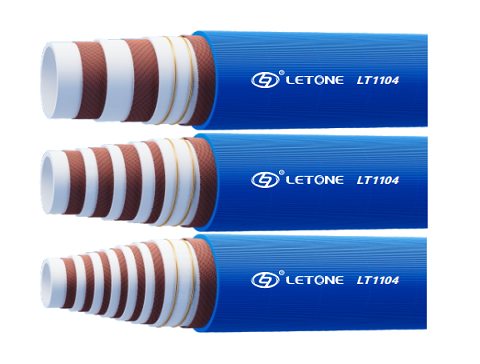
6 Wire Spiral Hydraulic Hose – Extreme High Pressure Hose
release date:2026-09-30 10:44:22
reading volume:
share:
Two layer steel wire braided hose is a type of flexible hydraulic pipeline product reinforced with two layers of high-strength steel wire braided layers as the skeleton. Its working pressure covers the range of 20MPa to 30MPa and belongs to the series of medium and high pressure hydraulic hoses. This product undertakes the function of pressure oil transportation in hydraulic systems, connecting components such as hydraulic pumps, control valves, hydraulic cylinders, and hydraulic motors. It is widely used in engineering machinery, mining equipment, metallurgical equipment, ship hydraulic systems, and industrial hydraulic stations.
The main technical standards that this type of product refers to include GB/T 3683 "Specification for Steel Wire Braided Reinforced Hydraulic Types for Rubber Hoses and Hose Assemblies Suitable for Oil or Water based Fluids" and ISO 1436, SAE J517 100R2 and other standards. The above standards provide systematic regulations on the inner diameter specifications, working pressure, burst pressure, pulse life, and testing methods of hoses. The two-layer steel wire braided structure corresponds to 2SN or 100R2 type in the standard system, and is one of the widely used pressure grades in hydraulic hoses.
2、 Structural design and material composition
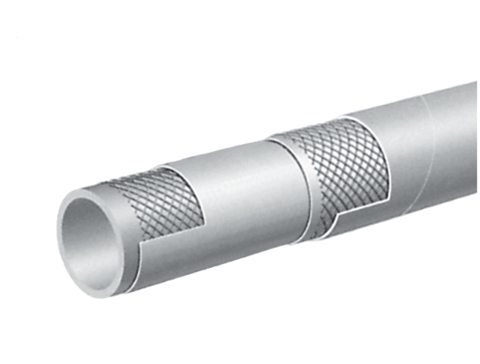
The two-layer steel wire braided hose adopts a multi-layer composite structure, and each functional layer cooperates to meet the comprehensive requirements of pressure resistance, oil resistance, and wear resistance.
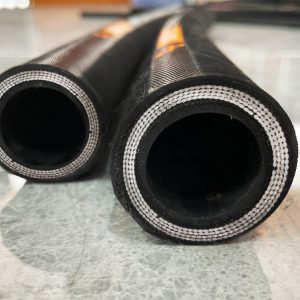 Inner layer (inner rubber layer): directly in contact with hydraulic oil, mainly made of nitrile rubber (NBR). The polar nitrile group in the NBR molecular structure endows it with excellent resistance to mineral based hydraulic oils, synthetic ester hydraulic oils, and water ethylene glycol hydraulic fluids. The inner layer rubber material needs to have low permeability and good resistance to compression permanent deformation to ensure the integrity of the seal under pressure cycling conditions. The thickness of the inner layer is usually between 1.5mm and 3.0mm, depending on the inner diameter and pressure rating of the hose.
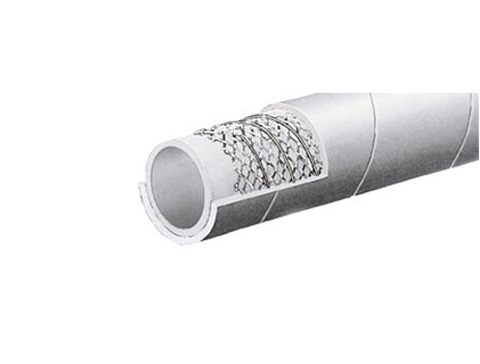
Enhancement layer: Adopting a two-layer high-strength steel wire weaving structure. The steel wire material is high carbon steel with a tensile strength of not less than 1800MPa, and the surface is plated with copper or zinc to enhance the bonding strength with rubber. The weaving angle is controlled around 54 ° 44 ', allowing the hose to have both radial pressure bearing capacity and axial flexibility when subjected to internal pressure. There is a middle adhesive layer between the two woven layers to ensure firm bonding between the layers. The number of steel wires and weaving density for each layer are accurately calculated based on the pressure rating and inner diameter specifications to ensure that the hose has sufficient blasting safety margin under rated working pressure.
Outer layer (outer rubber layer): The main material is a blend of chloroprene rubber (CR) or nitrile rubber and polyvinyl chloride. The outer layer should have oil resistance, wear resistance, weather aging resistance, and ozone resistance to resist oil pollution, ultraviolet radiation, ozone, and mechanical friction in construction machinery and industrial site environments. Some products have flame retardants added to the outer layer to meet the flame retardant requirements of mining and shipping scenarios.
End joint: The metal joint is permanently connected to the pipe body through a crimping process. The joint material is carbon steel or stainless steel, and the surface is galvanized or passivated. The types of connectors include metric threads, imperial threads, NPT threads, flanges, and quick insert connectors, which are suitable for interface specifications of different hydraulic systems.
3、 Core performance parameters
Working pressure: The working pressure of the two-layer steel wire braided structure covers the range of 20MPa to 30MPa, and the specific value is related to the inner diameter specification. Usually, small inner diameter specifications can achieve higher pressure levels, while large inner diameter specifications have relatively lower pressure levels.
Blasting pressure: not less than 4 times the working pressure. Taking the working pressure of 25MPa as an example, the blasting pressure should not be less than 100MPa, providing sufficient safety margin.
Pulse life: The fatigue life of hydraulic hoses under pressure cycling conditions is a key performance indicator. The standard requires hoses to withstand no less than 200000 pressure pulse cycles without failure at 133% of the rated working pressure.
Temperature range: The standard product operates within a temperature range of -40 ℃ to+100 ℃, and some products can be extended to+120 ℃. The low-temperature performance has practical significance for construction machinery operating in cold regions.
Inner diameter specifications: Common inner diameters range from 6mm to 51mm, including 1/4 inch, 5/16 inch, 3/8 inch, 1/2 inch, 5/8 inch, 3/4 inch, 1 inch, 1-1/4 inch, 1-1/2 inch, 2 inch, and other specifications.
Minimum bending radius: Depending on the inner diameter and braided layer structure, the minimum bending radius of a two-layer steel wire braided hose is usually between 5 and 8 times the diameter of the pipe.
Oil resistance performance: The volume change rate of NBR inner layer after immersion in standard test oil is the core indicator for evaluating oil resistance performance, and the volume change rate of high-quality products is controlled at a low level.
4、 Key points of hydraulic system adaptation
Pressure shock and pulse: Rapid switching of directional valves, termination of hydraulic cylinder stroke, and sudden load changes in hydraulic systems can all generate pressure shock and pulse. The pulse life of a hose determines its service life under frequent pressure fluctuations. When selecting, it should be confirmed that the pulse test data of the product meets the requirements of the system operating conditions.
Hydraulic oil type: Mineral based hydraulic oil is the standard applicable medium for NBR inner layer. For phosphate ester hydraulic oil, EPDM inner layer scheme should be selected; For water ethylene glycol hydraulic fluid, the applicability of the formula needs to be confirmed for the NBR inner layer. There are differences in the effects of different types of hydraulic oil on the swelling and aging of rubber materials.
Installation and bending: During hose installation, excessive bending and twisting should be avoided, and the bending radius should not be lower than the specified minimum value. The spacing between pipeline supports should be reasonably set according to the diameter of the pipe and the temperature of the medium, to prevent the pipe from sagging or stress concentration due to its own weight and pressure pulsation.
Joint connection: The connection strength of the crimping joint must meet the requirement of not falling off or leaking under the design pressure. During installation, the joints should be tightened according to the specified torque to avoid being too tight or too loose.
Leakage inspection: After the installation of the hose assembly is completed, a pressure test should be conducted to check for leaks in the joints and pipe body.
Inner layer (inner rubber layer): directly in contact with hydraulic oil, mainly made of nitrile rubber (NBR). The polar nitrile group in the NBR molecular structure endows it with excellent resistance to mineral based hydraulic oils, synthetic ester hydraulic oils, and water ethylene glycol hydraulic fluids. The inner layer rubber material needs to have low permeability and good resistance to compression permanent deformation to ensure the integrity of the seal under pressure cycling conditions. The thickness of the inner layer is usually between 1.5mm and 3.0mm, depending on the inner diameter and pressure rating of the hose.
Enhancement layer: Adopting a two-layer high-strength steel wire weaving structure. The steel wire material is high carbon steel with a tensile strength of not less than 1800MPa, and the surface is plated with copper or zinc to enhance the bonding strength with rubber. The weaving angle is controlled around 54 ° 44 ', allowing the hose to have both radial pressure bearing capacity and axial flexibility when subjected to internal pressure. There is a middle adhesive layer between the two woven layers to ensure firm bonding between the layers. The number of steel wires and weaving density for each layer are accurately calculated based on the pressure rating and inner diameter specifications to ensure that the hose has sufficient blasting safety margin under rated working pressure.
Outer layer (outer rubber layer): The main material is a blend of chloroprene rubber (CR) or nitrile rubber and polyvinyl chloride. The outer layer should have oil resistance, wear resistance, weather aging resistance, and ozone resistance to resist oil pollution, ultraviolet radiation, ozone, and mechanical friction in construction machinery and industrial site environments. Some products have flame retardants added to the outer layer to meet the flame retardant requirements of mining and shipping scenarios.
End joint: The metal joint is permanently connected to the pipe body through a crimping process. The joint material is carbon steel or stainless steel, and the surface is galvanized or passivated. The types of connectors include metric threads, imperial threads, NPT threads, flanges, and quick insert connectors, which are suitable for interface specifications of different hydraulic systems.
3、 Core performance parameters
Working pressure: The working pressure of the two-layer steel wire braided structure covers the range of 20MPa to 30MPa, and the specific value is related to the inner diameter specification. Usually, small inner diameter specifications can achieve higher pressure levels, while large inner diameter specifications have relatively lower pressure levels.
Blasting pressure: not less than 4 times the working pressure. Taking the working pressure of 25MPa as an example, the blasting pressure should not be less than 100MPa, providing sufficient safety margin.
Pulse life: The fatigue life of hydraulic hoses under pressure cycling conditions is a key performance indicator. The standard requires hoses to withstand no less than 200000 pressure pulse cycles without failure at 133% of the rated working pressure.
Temperature range: The standard product operates within a temperature range of -40 ℃ to+100 ℃, and some products can be extended to+120 ℃. The low-temperature performance has practical significance for construction machinery operating in cold regions.
Inner diameter specifications: Common inner diameters range from 6mm to 51mm, including 1/4 inch, 5/16 inch, 3/8 inch, 1/2 inch, 5/8 inch, 3/4 inch, 1 inch, 1-1/4 inch, 1-1/2 inch, 2 inch, and other specifications.
Minimum bending radius: Depending on the inner diameter and braided layer structure, the minimum bending radius of a two-layer steel wire braided hose is usually between 5 and 8 times the diameter of the pipe.
Oil resistance performance: The volume change rate of NBR inner layer after immersion in standard test oil is the core indicator for evaluating oil resistance performance, and the volume change rate of high-quality products is controlled at a low level.
4、 Key points of hydraulic system adaptation
Pressure shock and pulse: Rapid switching of directional valves, termination of hydraulic cylinder stroke, and sudden load changes in hydraulic systems can all generate pressure shock and pulse. The pulse life of a hose determines its service life under frequent pressure fluctuations. When selecting, it should be confirmed that the pulse test data of the product meets the requirements of the system operating conditions.
Hydraulic oil type: Mineral based hydraulic oil is the standard applicable medium for NBR inner layer. For phosphate ester hydraulic oil, EPDM inner layer scheme should be selected; For water ethylene glycol hydraulic fluid, the applicability of the formula needs to be confirmed for the NBR inner layer. There are differences in the effects of different types of hydraulic oil on the swelling and aging of rubber materials.
Installation and bending: During hose installation, excessive bending and twisting should be avoided, and the bending radius should not be lower than the specified minimum value. The spacing between pipeline supports should be reasonably set according to the diameter of the pipe and the temperature of the medium, to prevent the pipe from sagging or stress concentration due to its own weight and pressure pulsation.
Joint connection: The connection strength of the crimping joint must meet the requirement of not falling off or leaking under the design pressure. During installation, the joints should be tightened according to the specified torque to avoid being too tight or too loose.
Leakage inspection: After the installation of the hose assembly is completed, a pressure test should be conducted to check for leaks in the joints and pipe body.